Webinar Summary: Return to Work – Global Workplace Strategies & Guidance

With a number of countries gradually reopening after coronavirus COVID-19 lockdowns, employers are looking at how best to get employees back to work safely. Key challenges remain around the logistics of screening and testing, workforce planning and the overall employee experience and support. At the same time it is understood that some employees will remain working from home. According to the Global Work-from-Home Experience Survey from Global Workforce Analytics 77% of the workforce say they want to continue to work from home, at least weekly, when the pandemic is over.

The International Organisation of Employers (IOE) referred to the support and guidance provided by the local / national employer organisations (www.ioe-emp.org/en/policy-priorities/covid-19/). Key elements include:

  • coping with the after-effects
  • sustaining the right culture post COVID-19
  • embracing the new realities of work.

View IOE Presentation: https://www.globalhealthyworkplace.org/wp-content/uploads/2020/05/IOE-Return-to-Work.pdf

The European Union (EU) guidance on a safe return to work was presented by the

European Agency for Safety and Health at Work (EU OSHA) and features the following major components:

  • minimizing exposure to COVID-19 at work
  • managing workers working from home
  • resuming work after a period of closure
  • utilizing key principles of occupational safety and health like risk assessment.

View EU OSHA Presentation: https://www.globalhealthyworkplace.org/wp-content/uploads/2020/05/EU-OSHA-COVID-19-for-Global-Alliance-Webinar.pdf

Multinational enterprise Unilever introduced its gating criteria using a four tier system involving internal and external health indicators as well as market indicators related to public transportation and social gathering. Unilever’s Safe 6 principles for workplace readiness include:

  1. prepare the building
  2. prepare the workforce
  3. control access
  4. create a social distancing plan
  5. reduce touch points and increase cleaning
  6. communicate for confidence

The Global Centre for Healthy Workplaces will continue to gather and highlight primary international resources and is currently working with global leaders to generate good practice on return to work.

For more return to work and COVID-19 resources visit www.globalhealthyworkplace.org/news-media/coronavirus-covid-19-resource-hub.
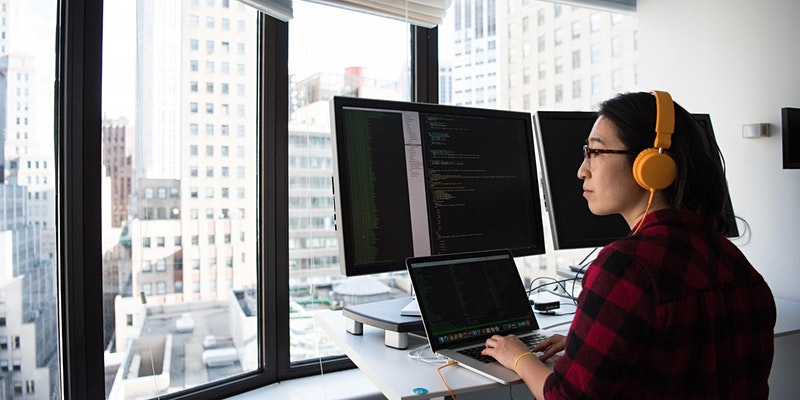

 

Webinar: COVID-19 Workplace Strategies & Guidance, Middle East & Asia-Pacific Region

Middle East, Asia-Pacific Webinar

Thursday, June 4, 2020

7am London / 10am Dubai / 11:30am Mumbai / 2pm Singapore/Hong Kong / 3pm Tokyo / 4pm Sydney / 6pm Auckland
This webinar will last for 90 minutes.

This webinar will take a look at how the COVID-19 crisis is affecting the Middle East and Asia-Pacific region. Leading multinational employers and national health agencies from the region will share their strategies on getting employees back to work safely and provide their assessment of the new working world.

Join this webinar hosted by the Global Centre for Healthy Workplaces and register your free ticket on eventbrite. Places are limited so book now.

Registration link: https://www.eventbrite.co.uk/e/covid-19-workplace-strategies-guidance-middle-east-asiapacific-region-registration-106907934510

Webinar: Return to Work – Global Workplace Strategies & Guidance

Return to Work Webinar

Wednesday, May 27, 2020

8am-9am MST / 11am-12am EDT / 4pm-5pm BST (GMT +1) / 5pm-6pm CET.

With a number of countries gradually reopening after coronavirus COVID-19 lockdowns, employers are looking at how best to get employees back to work safely. At the same time it is understood that some employees will remain working from home.

What are the immediate challenges and what will the new working world look like?

What do we need to keep in mind to maintain or enhance employee safety and wellbeing?

Global Alliance for Healthy Workplaces members will share their strategies and introduce resources they have developed for employers, with examples from the International Organisation of Employers (IOE) and the European Agency for Safety and Health at Work (EU OSHA).

Join this webinar hosted by the Global Centre for Healthy Workplaces and register your free ticket on eventbrite. Places are limited so book now.

Registration Link: https://www.eventbrite.co.uk/e/webinar-return-to-work-global-workplace-strategies-guidance-registration-105515076434

Webinar Summary, Slides & Video Recording: Working from Home – What is the Impact on Wellbeing?

Working from Home with Children

GCHW/IES May 5 Webinar Summary

The coronavirus COVID-19 crisis has heralded a massive shift in working patterns for many employees across most of the developed world. The impact on employee health and wellbeing is not fully understood yet. However, the current Institute for Employment Studies (IES) Working from Home Wellbeing survey  gives us a first glimpse. Stephen Bevan, Head of HR Research Development at UK-based IES reported on the data gathered from 850 respondents in the UK.

Key findings include:

  • After an initial major spike in musculoskeletal pain (50-60%) this has now trended lower, but still higher than before the crisis.
  • A deterioration of diet and exercise with 20% of respondents admitting to an increase in alcohol consumption, 33% eating a less healthy diet, and 60% exercising less.
  • Almost half (44%) report losing sleep due to worry and 42% report more fatigue than usual.
  • 36% say work pressure is too much and 43% don’t have enough time to get their work done.

According to Stephen Bevan some of the early lessons coming out of this research were:

  • Conduct risk assessment, duty of care & adjustments
  • Clarify performance expectations but with flexibility and employee involvement
  • Encourage scheduling to support work-life balance, sharing availability & boundary-setting within teams
  • Reduce the focus on work inputs and concentrate on outputs and quality – trust and task discretion are healthy
  • Be observant and spot ‘weak signals’ of declining mental health (Zoom is no substitute for empathy)
  • Remember, a random act of kindness does not make a manager ‘weak’ – especially now.

Finally, looking to the future a number of challenges are surfacing such as how to return to work safely, making working from home permanent, compressed working schedules and the impact of precarious work on mental health.

The Working from Home Wellbeing survey is currently being expanded to a number of additional countries (e.g. Brazil, India, UAE, Namibia). If you are interested in partnering on the global response please contact us at info@globalhealthyworkplace.org.

View webinar: Video Recording & Presentation Slides

IES UK Survey Information: https://www.employment-studies.co.uk/resource/ies-working-home-wellbeing-survey
IES UK Survey Link: https://wh1.snapsurveys.com/s.asp?k=158514663787

India Survey Link with Arogya World: https://www.surveymonkey.com/r/India-covid


Links to Workplace Health resources from the Institute for Employment Studies (IES)

A very recent study for Shell looking at the factors affecting mental illness and suicide risk in international shipping. Contains interviews with almost 30 global experts and a review of the research literature.
https://www.employment-studies.co.uk/resource/journey-health-and-safety-healthy-and-safe

A blog looking at new data from 27,000 EU workers which shows a link between precarious work and mental wellbeing.
https://www.employment-studies.co.uk/news/precarious-work-and-mental-wellbeing-lurking-covid-19-threat

A blog looking at how COVID-19 may make some health inequalities worse by steepening the so-called ‘social gradient’ in health.
https://www.employment-studies.co.uk/news/curve-steepens-covid-19-and-social-gradient-uk-workers

A report looking at the challenges faced by line managers who are under increasing pressure to deliver results and accommodate the needs of their direct reports. The ‘squeezed middle’ epithet is used to argue that, if managers are to deliver more wellbeing and better performance they need to be hugged not squeezed:
https://www.employment-studies.co.uk/resource/squeezed-middle-why-we-should-be-hugging-and-not-squeezing-line-managers

A report on Obesity and employment, looking at the prevalence of stigma and discrimination and why Obesity may need to be made a ‘protected characteristic’.
https://www.employment-studies.co.uk/resource/obesity-and-work

A blog looking at the evidence-base for mental health training for managers. It takes a critical view of interventions such as Mental Health First Aid, suggesting that they need more evidence if they are to be used more widely.
https://www.employment-studies.co.uk/news/mental-health-training-managers-case-caveat-emptor


Don’t forget to check out our Coronavirus COVID-19 Resource Hub: https://www.globalhealthyworkplace.org/news-media/coronavirus-covid-19-resource-hub/

Return to Work or Stay at Home Working?

Return to Work or Stay at Home Working?

As most employers are taking a cautious approach to reopening workplaces it is clear that remote work remains widely prevalent. Many human resource (HR) experts agree that these accommodations will be made permanent for some of the workforce which were not working from home before. Naturally, remote work is contingent on the specific industry and job position. For example, remote work is more suitable for finance, insurance and professional services compared to retail and manufacturing. Nevertheless, the growth of remote working is apparent – it is here to stay.

A recent survey by the National Alliance of Healthcare Purchaser Coalitions found that over 70% of salaried employees can work from home and effectively perform their jobs. Interestingly, a Harris Poll of 1,200 US employees commissioned by Zapier stated that 80% can better manage interruptions from coworkers and 65% believed their productivity had increased since they moved out of the office.

However, we know working from home is an adjustment for many and harbors both physical and mental health risks. The current Working from Home Wellbeing survey from the UK-based Institute of Employment Studies paints a concerning picture going by the interim findings:

  • A significant increase in musculoskeletal complaints: more than half of the survey respondents reported new aches and pains, especially in the neck (58%), shoulder (56%) and back (55%).
  • A deterioration of diet and exercise with 20% of respondents admitting to an increase in alcohol consumption, 33% eating a less healthy diet, and 60% exercising less.
  • Poor sleep and increased risk of exhaustion: 64% reported a loss of sleep due to worry and corresponding increased symptoms of fatigue (60%), likely linked to working patterns that include long and irregular hours (reported by 48%).
  • Mental health at risk with 50% reporting not being happy with their current work-life balance, 33% frequently feeling isolated, 21% being worried about job security and 41% worrying about their family members’ health.

Employers are not sitting idly by but rather have recognized the wellbeing challenges of remote working and are offering resources to their employees. The above mentioned survey from the National Alliance of Healthcare Purchaser Coalitions reported 53% of US employers are providing special emotional and mental health programs for their workforce, from professional psychotherapy to online resilience programs to regular check-ins with employees. At the same time telemedicine is rapidly becoming a regular feature, often with waived co-pays. Other key strategies include ergonomics programs and provision of ergonomic furniture, digital wellness platforms including exercise, healthy eating and coaching programs and also the reorganization of work processes.

To learn more about the Working from Home Wellbeing survey (updated findings) and workplace strategies from around the world join the Global Centre for Healthy Workplaces webinar on May 5 at 11am EDT / 5pm CET: www.eventbrite.co.uk/e/webinar-working-from-home-what-is-the-impact-on-wellbeing-registration-103687624476.

Return to work guides:

EU-OSHACOVID-19 Back to the Workplace – Adapting Workplaces and Protecting Workers

Randstad-Adecco-ManpowerGroupSafely Back to Work in the New Normal

SHRM-IOEReturn to Work During COVID-19