Awards Winner Hospital Alemão Oswaldo Cruz Discusses Workplace Health

Hospital Alemão Oswaldo Cruz

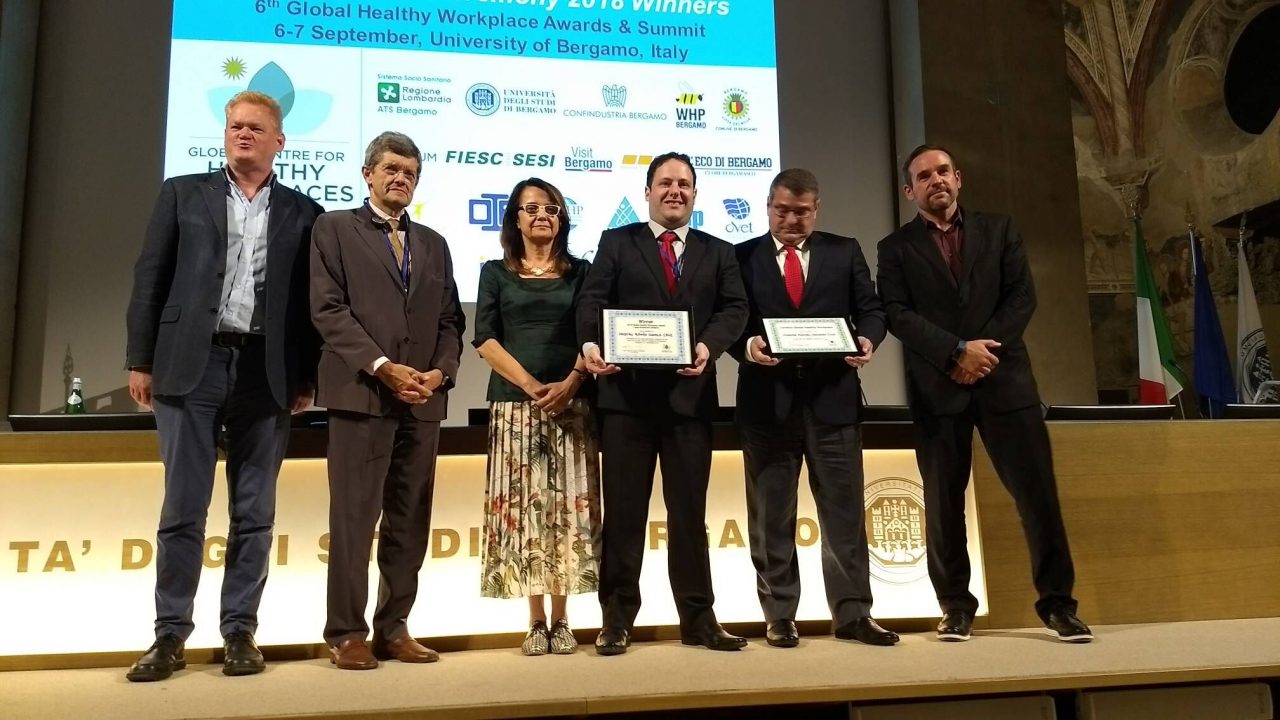
2018 Global Healthy Workplaces Large Employer Awards Winner

Hospital Alemão Oswaldo Cruz (HAOC) is a philanthropic not-for-profit private hospital in São Paulo, Brazil. HAOC’s commitment to a healthy workplace is long-standing and is reflected in its value proposition, which underlines it commitment to contributing to business sustainability by providing the best health experience possible. The HAOC Progama Bem-Estar (PBE) touches the key dimensions of a healthy workplace, is driven by 18 health professionals as well as strategic partners and includes an integrated digital platform. Reductions in health risks, health care costs and absenteeism have produced a cost-effective program and a positive return-on-investment (ROI).

The Global Centre for Healthy Workplaces spoke with Leonardo Piovesan Mendonça, Coordinator of Occupational Health and Quality of Life at Hospital Alemão Oswaldo Cruz (HAOC) about the hospital’s quality of life healthy workplace programme success and future challenges.

GCHW: What are the key elements, which make your healthy workplace program successful?
Leonardo Piovesan Mendonça: The program foundation based on the assistance model of the Alemão Oswaldo Cruz hospital, the model of the “5 Keys” for healthy workplaces (WHO), and also the strategic partnership, since 2010, with the Health Improvement Program (HIP) from the Stanford University and the integrated management of health care, occupational, safety and quality of life programs was also essential for the success of the program.

GCHW: Where do you see the main challenges of creating a healthy workplace in the future?
Leonardo Piovesan Mendonça: The challenges are numerous. Organizational leadership needs to be aware of this importance. Paradigm shifts are fundamental and investing in health promotion rather than managing the disease will contribute to a more sustainable model of management and the business itself. The search for the quality of life and wellbeing must leave the walls of the company and contribute to the development of society and the employees families.

GCHW: What are your take aways from the Global Healthy Workplace Summit in Bergamo?
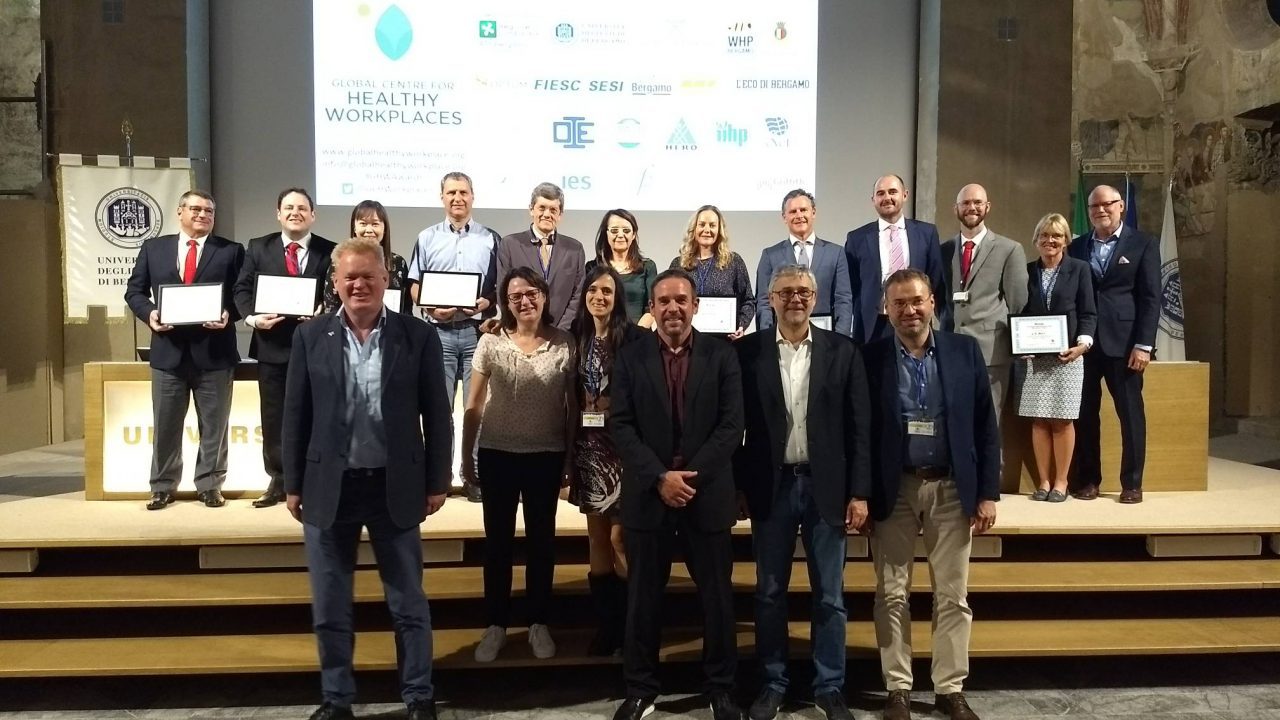
Leonardo Piovesan Mendonça: The certification and international awards were for us very proud, because we were able to guarantee that we are on the right track contributing to the change of lifestyle, quality and health in the lives of our employees. The event was brilliant, with presentations of winning cases, and the lectures with people of recognition in the key themes. The presentations showed the importance of technology, as allied in the actions of population health management and in the programs of promotion, prevention and well-being.

To view Hospital Alemão Oswaldo Cruz’s profile and Awards presentation visit: https://www.globalhealthyworkplace.org/profile/hospital-alemao-oswaldo-cruz-large-employer/
 

Multinational Occupational Health Awards Winner Lendlease on Workplace Health Success

Lendlease

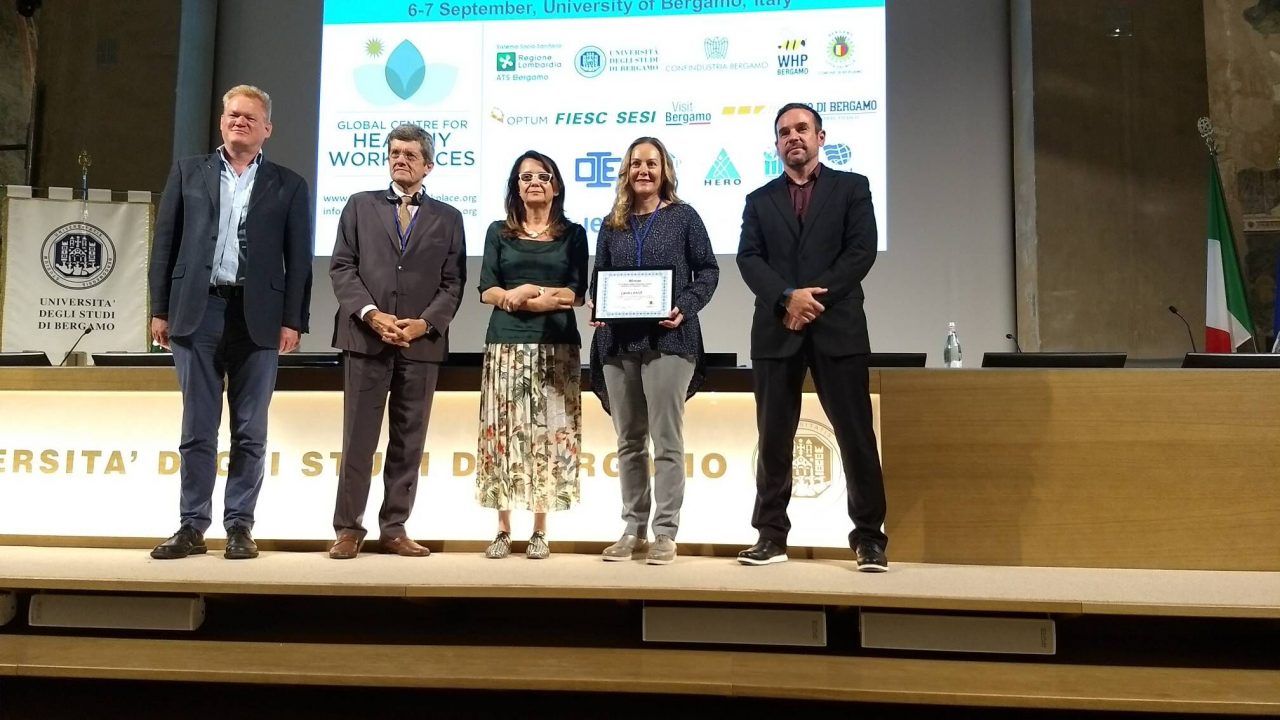
2018 Global Healthy Workplaces Multinational Awards Winner

The Australian-based construction and infrastructure company has demonstrated a long-time dedication to sustainability and actively promoting employee health and wellbeing. Lendlease’s Global Minimum Requirements (GMRs) provide a consistent global standard to create healthy and safe workplaces for all including the subcontractor workforce. The 2017 Global Work Health Insight study showed continued progress in various health and wellbeing areas such as mental wellbeing, healthy eating and physical activity. More than 1631 workers have participated in at least one mental health program, 66% of employees using their wellbeing leave and 74% of employees are highly engaged. This has led to a positive social return-on-investment (SROI).

Jane Gardner, Health and Wellbeing Program Manager, Group Sustainability at Lendlease spoke with the Global Centre for Healthy Workplaces about Lendlease’s healthy workplace programme success.

GCHW: What are the key elements, which make your healthy workplace program successful?
Jane Gardner: At Lendlease we believe caring for our employees extends beyond keeping them physically safe to also looking after their mental and physical wellbeing. Lendlease’s Health and Wellbeing strategy and framework focuses on four key strategic pillars: supporting healthier minds, developing healthier bodies, building healthier places and creating healthier cultures.

Endorsement from leadership and our Board of Directors enables us to deliver an integrated health and wellbeing strategy and framework, and empowers our regional teams to drive health and wellbeing initiative.

GCHW: Where do you see the main challenges of creating a healthy workplace in the future?
Jane Gardner: There is a growing awareness around mental health and I believe companies need to support mental health in the workplace. However, mental health programs in isolation will not provide a mentally well workplace. The challenge for workplaces of the future need to encompass a holistic approach to create a mentally well workplace. This approach should focus on leadership, working hours, technology (including screen time and sedentary behaviours), the interaction with the physical workplace and the ageing workforce – all these challenges are something workplaces need to consider in their health and wellbeing strategy for the future

GCHW: What are your takeaways from the Global Healthy Workplace Summit in Bergamo? 
Jane Gardner: The Global Healthy Workplace summit showcased some of the world’s best Workplace Health and Wellbeing offerings and provided insights into engaging investors and the importance of providing healthy workplace indicators to showcase good business performance.

From Lendlease

At Lendlease we offer our employees wellbeing leave, which is an industry first, encouraging them to take a proactive and preventative approach to their health. In the last financial year, 68.4 per cent of eligible workers took wellbeing leave.

We also have a range of policies around flexible working arrangements and leave entitlements, programs on sleep, nutrition and fitness, and medical checks.

Mental health continues to be a growing focus for Lendlease. Our programs offer preventative support to employees experiencing a mental health condition, and guide our managers in supporting employees who may be experiencing mental health challenges.

We’re proud to say more than 1,150 Lendlease employees have been trained in mental health first aid since 2015, and thousands more in other mental health programs including mental health awareness, Mates in Construction and mindfulness courses.

Lendlease is committed to the safety of our people and those who engage with our assets and sites. Our Global Minimum Requirements ensure we operate consistently across all operations including on safety, health and wellbeing standards.

Every two years, Lendlease employees participate in a work health insights study that informs our health initiatives and programs. In 2017, we collected data from 158 work sites across eight countries where we operate.

We believe our integrated health and wellbeing programs yield strong results and return on investment. A social return on investment analysis found for every dollar invested we receive a return of $1.09.

To view Lendlease’s profile and Awards presentation visit: https://www.globalhealthyworkplace.org/profile/lendlease-multinational-employer/


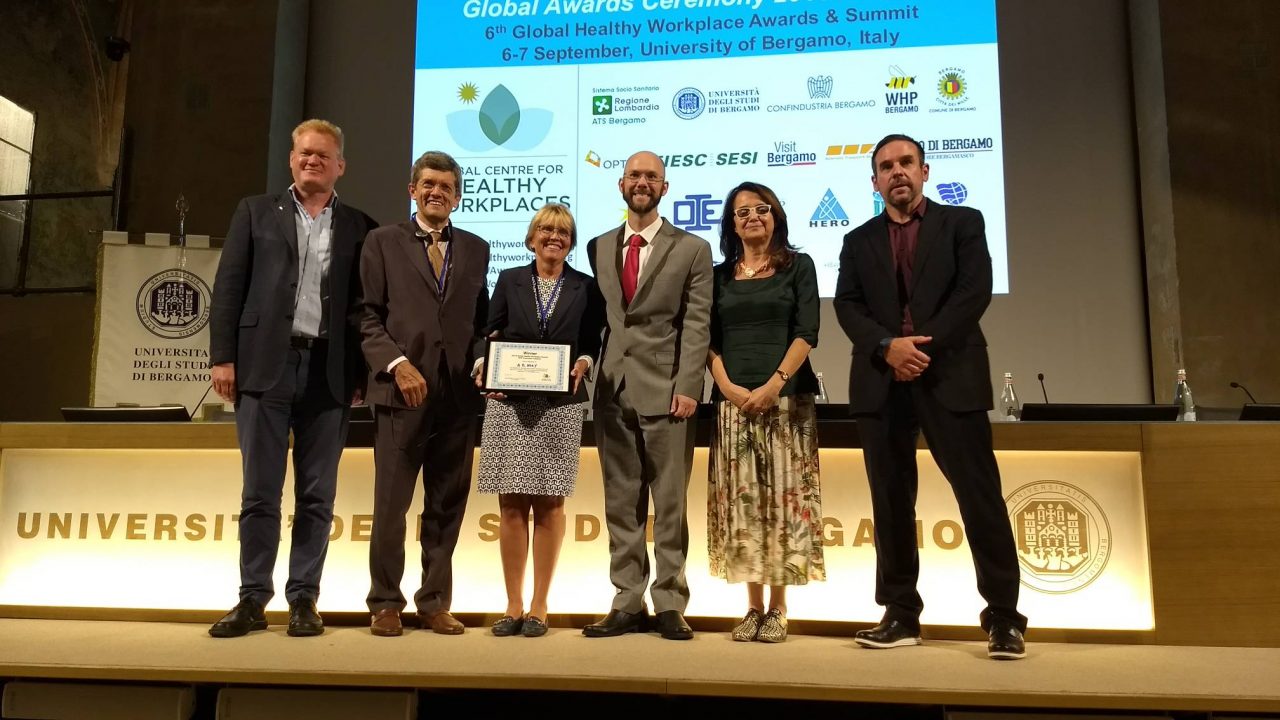
Interview with SME Occupational Health Awards Winner A.B. May

AB May

2018 Global Healthy Workplaces SME Awards Winner

A.B. May is a local, family-owned business of 250 employees providing home services in the Kansas City area. The owners play a visible leadership role in driving and living the 12 elements of great management which are designed to empower all employees. The holistic health programme is rooted in the five pillars of wellbeing: physical, financial, purpose, social and community. Success is measured by a comprehensive scorecard, engagement surveys, company driven data and a vision traction organizer. A.B. May credits its increased profits, increased engagement and decreased turnover to its health and wellbeing programme.

The Global Centre for Healthy Workplaces spoke to A.B. May after their Awards success to find out more about their program and future challenges.

GCHW: What are the key elements, which make your healthy workplace program successful?
JT Galloway: The key elements which make our program successful could be broken down into 2 main parts: Manager engagement and employee ownership. With manager engagement, their direct reports will know what is important, and act similarly but with the freedom to put their own strengths forward on how to live out our values. These feed each other and build momentum for initiatives.

Shirley Posladek: Commitment from senior leadership that whatever the business is, we are in the business of people.  People matter, they count.  The overarching vision of “helping people thrive”.  It is a holistic view of people’s needs and provides a platform for them to enter into benefits and programs they are ready to begin.  Listening to co-workers and letting them build the platforms they want.

GCHW: Where do you see the main challenges of creating a healthy workplace in the future?
JT Galloway: In the future, I still believe the main challenge of creating a healthy workplace will be in having managers and owners genuinely exemplifying what they want from their employees. These actions and beliefs will always be difficult to stick to when adversity comes around to show they prioritize values over profit.

Shirley Posladek:

  • Creating an environment of trust.
  • Rising costs to good health
  • Focus on symptoms over causes
  • Perceived cultural stigmas to healthy choices
  • Changing learned behaviors

GCHW: What are your takeaways from the Global Healthy Workplace Summit in Bergamo?
JT Galloway: The main takeaways for me from the summit in Bergamo was that with this work being incredibly important, there’s unbelievable opportunities worldwide for positive growth and change. This only gets done by collaboration, intentional work, and employee-centered focus.

Shirley Posladek: There were so many professionals that are working every day to provide information and strategies for people to live long, healthy lives.  We were very impressed with the presentations and research.  The data agrees that there is much we can do to affect our own health and the workplace is a natural place to help people make healthy decisions.

To view A.B. May’s profile and Awards presentation visit: https://www.globalhealthyworkplace.org/profile/ab-may-sme-employer/