Snapshot of COVID-19 Vaccination Around the World

vaccinations

By Patricio V. Marquez and Betty Hanan

COVID-19 vaccination is critical to reduce the risk of infection and death due to COVID-19 disease, and hence for global economic recovery and normalization in social interactions and travel. Indeed, since a large share of the world needs to be immune to the virus, the COVID-19 vaccine deployment is requiring an unprecedented effort in terms of population coverage.

As we are currently observing in some rich countries, even with considerable doses of safe and effective vaccines on hand, countries face major challenges deploying these vaccines at scale.  This situation is potentially challenging in low- and low-middle-income countries, where health systems are weak and resources, both financial and human, are limited.

For the successful implementation of COVID-19 vaccination programs, rigorous pre-planning for core functions and logistics is necessary.  Besides the challenges associated with accessing vaccines in a still limited supply environment, mass vaccination roll-out requires: (i) robust supply systems to ensure effective vaccine reception, storage, handling, and stock management once vaccine doses have been secured; (ii) rigorous temperature controls across the supply chain; (iii) maintenance of adequate logistics management information systems, including robust service and coverage tracking systems to ensure traceability and address counterfeit vaccines; (iv) carefully planned deployment operations for vaccine transportation, reverse logistics, managing recalls, and management of supply chain information; (v) trained, motivated, and supervised vaccinators; (vi) a pharmacovigilance system to monitor adverse effects in the population after the administration of vaccines; (vii) tailored large-scale communication and outreach campaigns at household, community, and national levels to build trust and address vaccine hesitancy; (viii) citizen monitoring/oversight by publicizing detailed vaccination information on a regular basis; and (ix) grievance redress mechanisms.   All these are vital to safeguard the COVID-19 vaccine supply and prevent any interruptions in the supply chain from the point of manufacturing to vaccine administration, to post-vaccination monitoring and evaluation.

The complexity of the task is further aggravated by hesitance on the part of population groups to receive the vaccine.  And, as press reports in different countries have been informing, the risk of elite capture in access to vaccines is significant.  For example, in a few countries in South America, ministers of health and other high-level officials, including a former President, have been fired or resigned for their involvement in scandals over coronavirus vaccine queue-jumping.

So where does the effort stand at this moment?

Despite the above challenges, progress is being made.  But the risk of a growing inequity in the world for accessing, deploying, and administering COVID-19 vaccines, that may leave the poorest regions behind along with vulnerable population groups within rich and poor countries alike, is becoming more visible and worrisome.  And the reality of isolated cases of adverse effects in recipients of COVID-19 vaccines cannot be discounted as they may hinder the implementation of vaccination programs and add to the mistrust of some people to getting vaccinated.

Based on vaccination data from the Our World in Data site, some highlights are provided to illustrate where the global effort stands at this moment.

First and foremost, the scientific and technological “miracle” that allowed vaccines to be developed and deployed in 12 months, is a historical “giant step for humanity.”  Let’s keep in mind, that the development of new vaccines in the past has typically required years of research and testing before deployment and use.

Second, the vaccination effort has been initiated in more than 140 countries, albeit with still limited population coverage.  Beginning in December 2020, more than 420 million vaccine doses had been administered worldwide in just three months, equal to 5.40 doses for every 100 people.

Third, in terms of population coverage, data shows:

  • 251.84 million or about 3.2% of the total population in the world have received at least one dose of a COVID-19 vaccine.
  • 97.61 million or just 1.3% of the total population in the world have been fully vaccinated.
  • There is already a stark gap between vaccination programs in different countries and across regions, with many yet to report a single dose:  21.76% of the total vaccine doses have been administered in North America (mainly the United States) and 12.54% in Europe, compared to South America (6.28%), Asia (3.44%), Africa (0.60%), and Oceania (0.4%).
  • While the supply of vaccine doses remain relatively limited globally, most countries have focused their early vaccination efforts on priority groups like the clinically vulnerable; people in their 60s, 70s and older; and front-line workers, like doctors and nurses.   Most of the vaccines currently in use require two doses for a patient to be fully vaccinated.

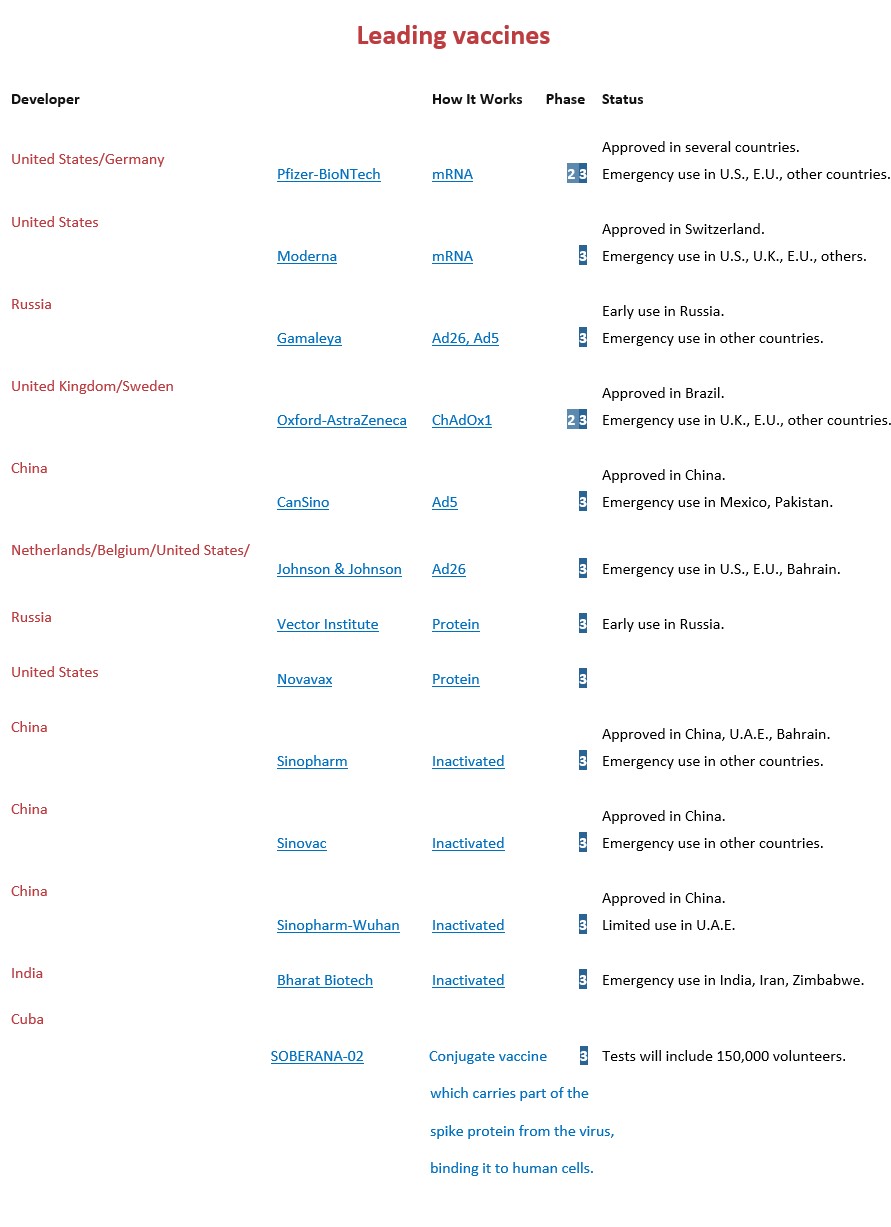
Fourth, some of the COVID-19 vaccines being used have received emergency use authorization (EUA) from Stringent Regulatory Authorities (SRA) included in the World Health Organization (WHO) list of SRA, and/or have received emergency use listing (EUL) by WHO as well.  The concept of a SRA was developed by the WHO Secretariat and the Global Fund to Fight AIDS, Tuberculosis and Malaria to guide medicine procurement decisions and is now widely recognized by the international regulatory and procurement community.  That is the case of the Pfizer-BioNTech, Moderna, Oxford-AstraZeneca, and Johnson & Johnson vaccines.  However, as shown in the box below, there are other COVID-19 vaccines that have been approved only by National Regulatory Authorities (NRA) that are not included in the WHO SRA list, which is allowing market entry and their use in several countries.


Source:

https://www.nytimes.com/interactive/2020/science/coronavirus-vaccine-tracker.

https://www.cnn.com/2021/03/03/americas/cuba-covid-vaccine-soberana-intl-latam/index.htmlhttps://www.cnn.com/2021/03/03/americas/cuba-covid-vaccine-soberana-intl-latam/index.html

Fifth, there are several countries that are currently leading the world in the vaccination effort.  As shown in the figures below, the share of the total population that received at least one vaccine dose in the five “leading countries” (those with 20% and higher coverage as of today), ranges from a high of 59.6% in Israel, 38.7% in the United Kingdom, 29.1% in Chile, 23.3% in Bahrain, and 23.1% in the United States.

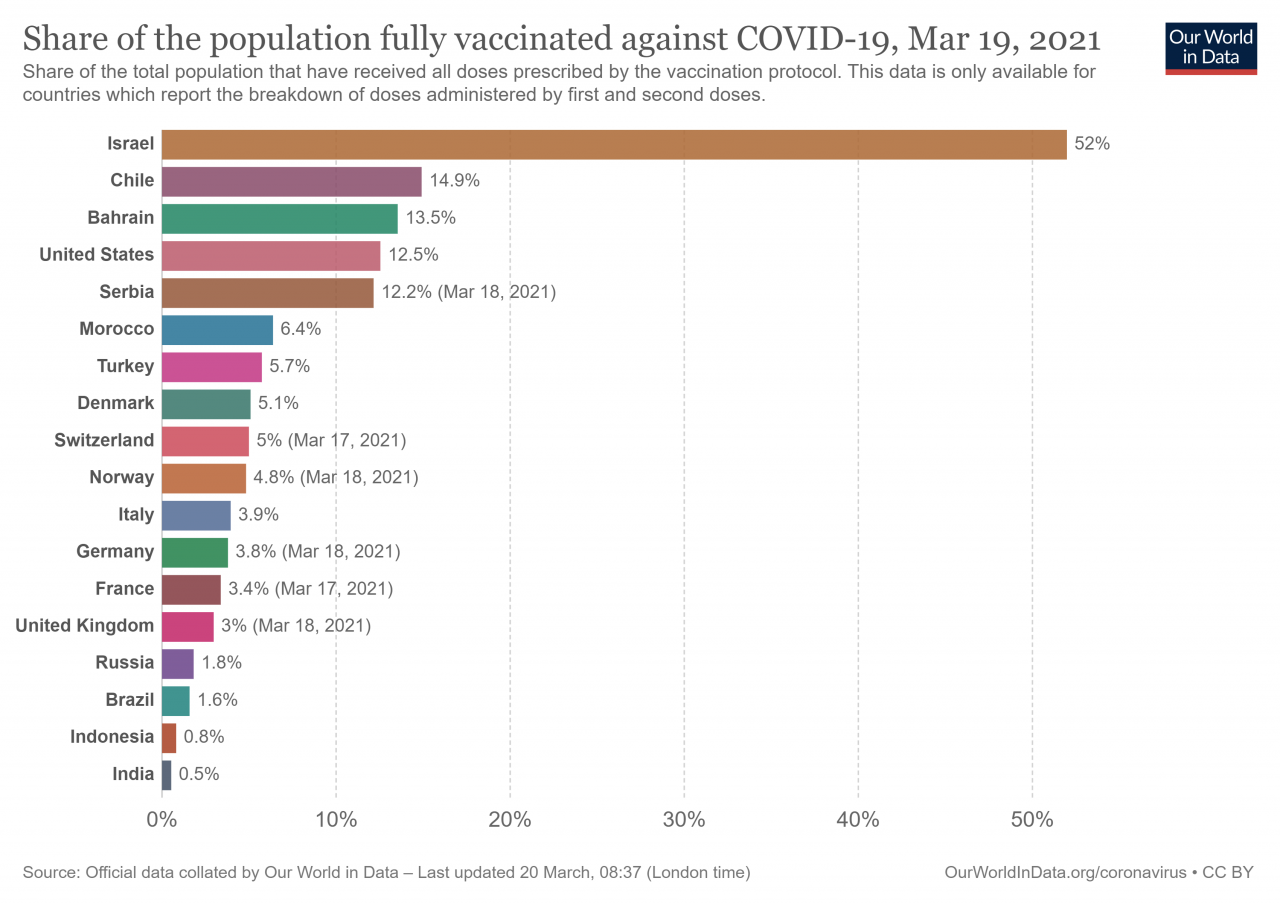
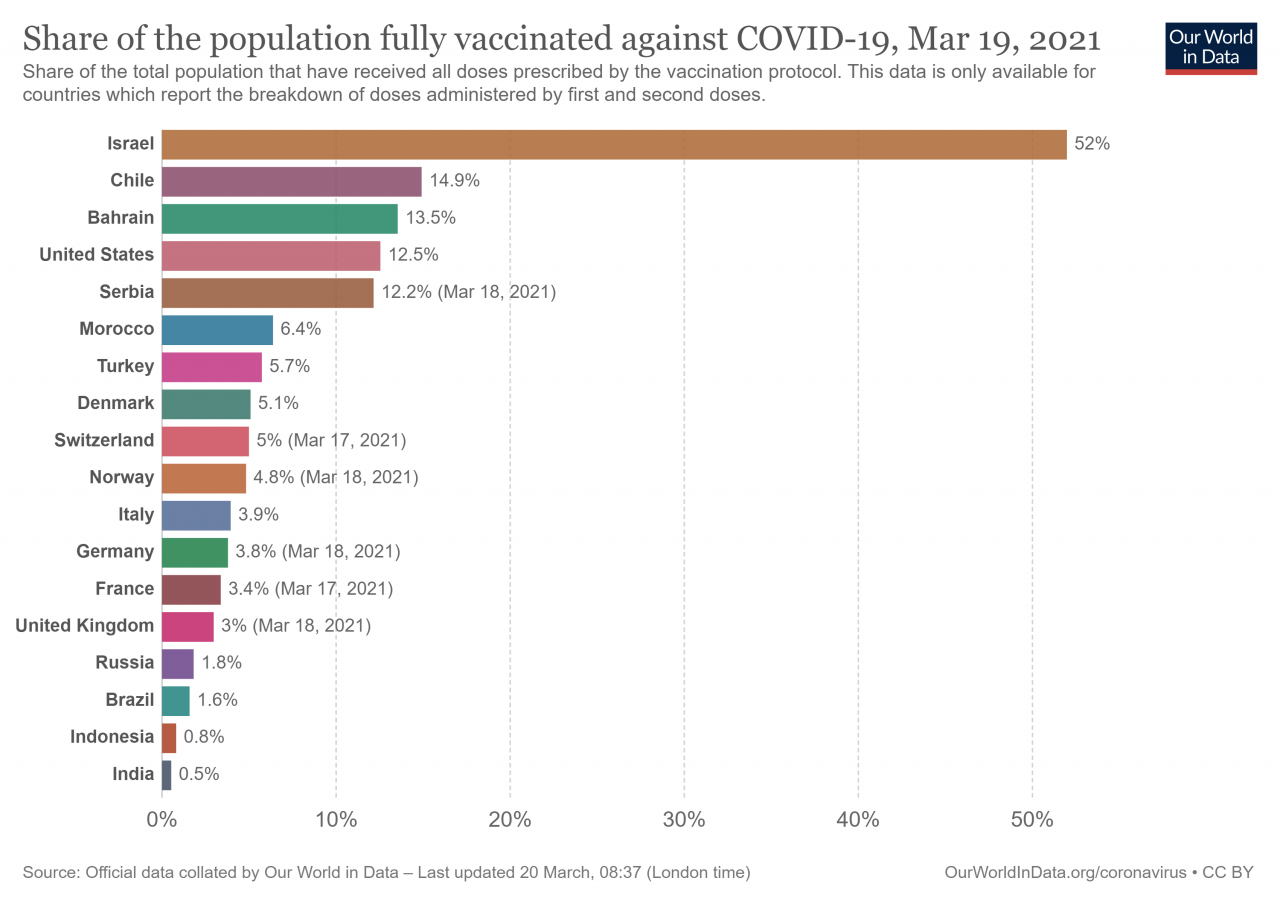
In terms of the share of the total population that have received all doses prescribed by the vaccination protocol, it ranges in the five “leading countries” (those with 10% and higher coverage as of today), from a high of 52% in Israel, 14.9% in Chile, 13.5% in Bahrain, 12.5% in the United States, and 12.2% in Serbia. 


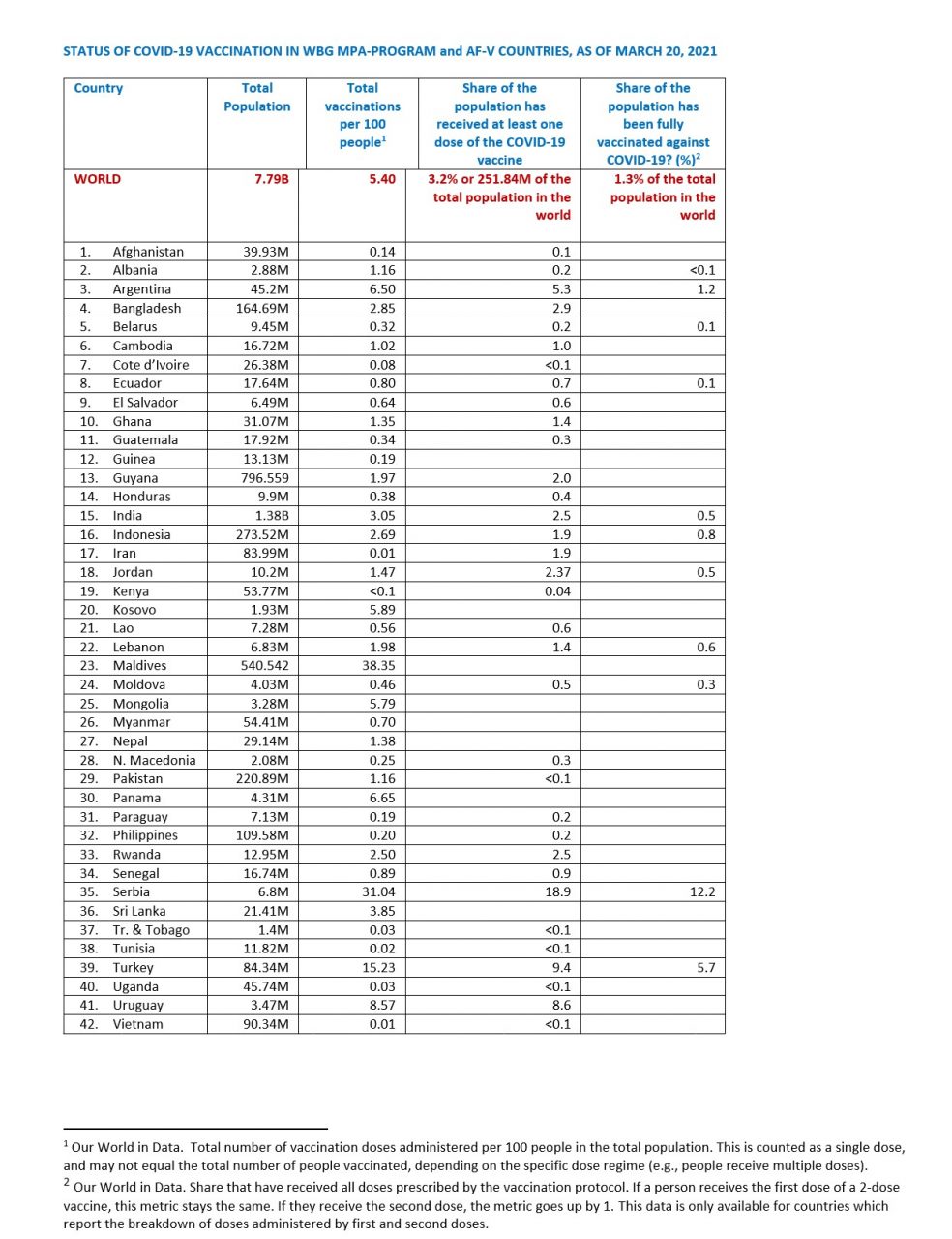
While the “leading countries” have made significant gains in expanding vaccination coverage, in most cases relying on the strength of pre-existing, well-structured health systems that offer universal coverage to the population, as in the case of Israel, Chile, and the United Kingdom, most countries in the world are lagging.  This is clearly illustrated in the table below, that shows that in countries such as Afghanistan, Ecuador, Kenya, Lao, Tunisia, and Uganda, the share of the population that has received at least one dose of the COVID-19 vaccine is less than 1%.

Sixth, given limitations in the supply of vaccines, disparities in the pace and coverage of the vaccination effort across the world, and the looming threat of virus variants that are found to be deadlier, more contagious, and more resistant to vaccines, it is critical to stress that while we should be optimistic about the impact of vaccines in helping build herd immunity in countries, governments need to continue to support essential public health measures such as the use of masks, hand hygiene, and physical distancing.  These are highly cost-effective measures that complement vaccines in the fight against the ongoing pandemic, reducing the spread of the coronavirus and preventing disease and death.

So, let’s be clear: while progress is being made, we are not yet close to suppressing the coronavirus or in a situation where we can claim victory and return to the “normal life” of the recent past!

This article first appeared on pvmarquez.com: http://www.pvmarquez.com/covid-19vaccinesintheworld

Changing back to ‘normal’

work from home outside

It is difficult to place where we are on the Coronavirus cycle. Maybe we are in the middle of the pandemic cycle with the worst behind us or with new variants, worse may be to come. Wherever we are, commentators are beginning to ponder when will we be back to normal and what exactly will ‘normal’ look like.

Will home become the new office or an adjunct to what was the office? Certainly, commercial property prices in many of our finest cities indicate workplaces bulging with workers could be a thing of the past. As a further sign, Transport for London has said that it may be a long time before usage of buses and its famous tube returns to pre-COVID levels.

The expansion in the digitalisation of work is perhaps one feature we can be sure of if only because it was probably going to happen anyway; COVID has merely speeded it up. Today, employees can and are, working not only from home but from the beach or holiday resort. What was once the preserve of the elite is quickly becoming the working practice for the many with profound implications for sourcing talent, functionality, and accountability.

CEOs have traditionally loved talking about ‘change’ and how they, by their smart endeavours, bring it about. Stimulating change has been part of the added-value fare they bring, helping the business to keep ahead of the curve, responding to new opportunities and efficiencies. Despite its apparent benefits, change when forced on workers, has often been a source of stress and unhappiness.

In the COVID (or post-COVID) era, change is likely to be as much a factor of external forces and even employee empowerment as it is by CEO choice. Managing change rather than stimulating it may be the most difficult test for the CEO of the future.

If employers are to motivate employees – especially those who have become used to working away from the office – they will need to ensure meaningful involvement in designing the new normal. If not, both employers and employees will find foresight in the words of Queen Victoria, “change, why do we need change? Aren’t things bad enough as it is?”

‘We’re in a syndemic’: What’s that? And what will help us get through it? – HealthPartners

syndemic - workplace - healthpartnersWhile the COVID-19 vaccine offers a beacon of hope, a return to business as normal still seems far off. Here we share some inspiration for how employers can start planning for a safer, healthier future, even in the midst of so much uncertainty.

Disturbing health trends create a ‘syndemic’

The key, according to Nico Pronk, President at HealthPartners Institute and Chief Science Officer at HealthPartners, is taking a hard look at whether our “business normal” was as healthy as we’d like to think.

Many studies show that underlying chronic diseases, such as diabetes, hypertension, and mental health conditions, have been affecting workplace productivity and driving up health care claims long before COVID-19. These conditions are attributed to decades of disturbing trends in obesity, physical inactivity, poor nutrition, elevated stress levels, and sleep disturbances. And on top of that, the people who are struggling most with these issues are those most affected by and at risk for COVID-19. Obesity has been linked to an increased risk of mortality among patients with COVID-19, Pronk explains.

“We’re not just in a pandemic,” says Pronk. “We’re in a syndemic too.” A syndemic, he explains, is characterized by two or more diseases that adversely affect one another. And, as COVID has shown, they tend to amplify inequities, hitting vulnerable groups hardest.

Taking on a syndemic sounds like a daunting challenge for most businesses. But, according to Pronk, there are many practical things that businesses can do right now to start building a better future.

COVID-related innovation: a launch pad for better workforce health

And, the pandemic has provided fertile ground for change. “COVID-19 forced organizations to move to more flexible, innovative working models. These in turn may have led to greater empathy, compassion and human connection,” he says.

“Now is the time for employers to use these experiences to create a long-term plan to keep workers safer and healthier, maintain production levels to meet demand, and keep their doors open for customers whatever health threats we face. It’s easier said than done, but strong scientific guidance is available.”

That focus on science has led to a new network of researchers dedicated to addressing COVID-19 and related health concerns. Called the Healthy Living for Pandemic Event Protection (HL-PIVOT), it’s all about education, training, and the creation of policies and workplace programs that change our culture of health and well-being on global, national, state, and local levels.

The HL-PIVOT’s first call to action for employers is to begin to outline those activities that can prevent illness, protect and promote health, and optimize productivity.

As inspiration for others, here are ways two Midwestern employers, Andersen Corporation, North America’s largest window and door manufacturer and retailer, and MSP Communications, a creative agency and publisher of Mpls St. Paul and Twin Cities Business magazines, are following this call to safeguard the health of their workers now and in the future.

1. Use the best science to stop COVID-19 virus spread

Public health measures, such as social distancing, masking, screening, focus on hygiene and other workspace planning measures must continue even as employees start to get vaccinated.

Creating a culture of “this is the way things are done around here,” will help ensure your employees keep sticking to the guidelines, advises Pronk.

MSP Communications did just that – they created a culture centered on employee health and safety during the pandemic. Part of this new way of doing things involved working mostly from home, moving their headquarters to a smaller office for collaborative purposes that followed COVID workspace set-up guidance, and creating protocols for screening, hygiene and contact tracing.

“Our structured approach to COVID pandemic planning sent a single, strong, unified message of continuity to MSP’s employees, revealing that we truly care and that we are doing all that we can to keep people safe,” says Mary Authier, Vice President of Operations at MSP Communications.

For Andersen Corporation, while their corporate employees could work from home, that wasn’t an option for their production, logistics, installation and service workforce. To create a safe and functional on-site work environment, Andersen quickly evolved their plans, created committees, extra policies, procedures, contact tracing, Personal Protection Equipment (PPE) requirements, and new safety and testing protocols.

For the retail side of their business, Andersen also created a virtual consultation process that reduced the amount of time spent in customers’ homes.
“The health and safety of our employees and customers are the driving force and number one priority in our pandemic and post-pandemic plans,” says Sara Johnson, Health and Well-being Program Manager at Andersen Corporation.

2. Make it easy for people to move and be physically active

With the added stress of the pandemic and all of the change employees and their families have endured, healthy physical activity may have taken a back seat.

Andersen Corporation realized early on that to keep their employees connected and to help maintain both their mental and physical health, they needed an engagement committee. The committee identified many activities for teams to participate in to stay connected and healthy.

To encourage healthy activity during work, one employee started a virtual chair yoga session three to four times a week, inviting all employees who had an email address.

“Employees expressed how much they enjoyed these sessions and how they were bummed if they missed them,” explains Johnson. “Those who attended love them and said they want to make sure they continue.”

3. Focus on people first

Part of Andersen Corporation’s engagement committee’s efforts involved a complete culture shift in how they approached everyday work conversations.

“Before we would get down to business right away in our meetings, and now we use the first five minutes to be a bit more personable and ask how people are doing,” says Johnson.

Andersen also expanded their Employee Assistance Program (EAP) benefits, which include webinars and resources to help manage stress, depression, communicating effectively with children, and other issues.

[Note: HealthPartners’ EAP program provides a broad range of content on resiliency and work-life balance, with a specific focus on working through COVID challenges. There is also an opportunity to consult with a clinical counselor to provide more personal support.]

Both companies were determined to support employees in remaining connected. At Andersen, Johnson says, they made a point of encouraging employees to reach out to co-workers, perhaps inviting them to a casual call to catch up or to send a positive message.

MSP’s leadership also took time on several occasions to have one-on-one conversations with their employees to touch base on how they are doing. In-person collaborative meetings at a safe distance helped to protect their culture, keeping everyone connected. Providing mental health resources also supported their teams’ well-being during this stressful time.

“We’ve never had to work harder as a business, and we’ve never been more creative and smarter in our efforts to keep our employees safe, healthy and productive,” adds Authier.

It’s smart, creative coping strategies like these that many organizations such as Andersen and MSP Communications are leaning on as they plan for the near and longer-term future.

“Helping employees be physically, mentally, socially and emotionally fit can prepare them for the challenges of infectious diseases such as COVID-19,” says Pronk. “Promoting optimal health will not only enhance productivity and performance – it will also place emphasis on human-centric principles such as connectedness and adaptability, which are at the heart of continued organizational success.”

View an excerpt of Nico Pronk’s Work, Health, and COVID-19 article in ACSM’s January/February 2021 edition of Health and Fitness Journal.


This article was first published on HealthPartners by Erin Erickson, MA and Nico Pronk, President at HealthPartners Institute and Chief Science Officer at HealthPartners, and Global Centre for Healthy Workplaces Advisory Board member.

View original article here: ‘We’re in a syndemic’: What’s that? And what will help us get through it? – Plan Blog (healthpartners.com)


Global Healthy Workplace Awards 2021 Coming Soon!

Global Healthy Workplace Awards 2021 Coming Soon!

In the midst of the global pandemic employers are scrambling to provide health and wellbeing support to their employees as they continue to work in challenging conditions. The 9th round of Global Healthy Workplace Awards and Certification will open in the spring.

The Awards and Certification provide leading organisations the opportunity to show their commitment to safe and healthy workplaces, benchmark their program against the world’s best and seek recognition on the global stage. Applications covering the following areas:

  • health and safety in the physical work environment
  • health, safety and well-being in the psychosocial work environment (e.g. workplace culture)
  • personal health and wellbeing resources
  • involvement in the community to improve the health of workers, their families and members of the community

Our webinars in the coming months will outline the criteria and provide interested parties with the opportunity to ask questions. In the meantime we suggest taking a look at the application tutorial and past winner profiles at https://www.globalhealthyworkplace.org/awards/application/ and we will contact you again in the near future with next steps.

COVID-19 Vaccination: Israel, United Arab Emirates, and Bahrain are Showing the Way Forward

COVID-19 Vaccine

By Patricio V. Marquez, Betty Hanan, Giovanni S. Marquez

    “Medicine is a social science, and politics is nothing else but medicine on a large scale”
–Rudolf Virchow, German physician, founding father of pathology and social medicine, 1821-1902

With the approval for emergency use of Pfizer/BioNTech’s and Moderna’s COVID-19 vaccines by the Stringent Regulatory Authorities (SRA) in the United Kingdom, Unites States,  Canada, and the European Union beginning in early December 2020, different countries have started to roll out their COVID-19 vaccination campaigns.

While all of us are filled with optimism that the vaccines will help overcome the pandemic in a not-too-distant future and that we can then regain some normalcy in our lives, the critical challenge facing all countries continues to be how to ensure that “the most logistically difficult vaccination campaign in history” is conducted in the face of a limited supply of vaccines, at least one vaccine with “unprecedented cold chain requirements”, and a “hesitant and weary public”.  

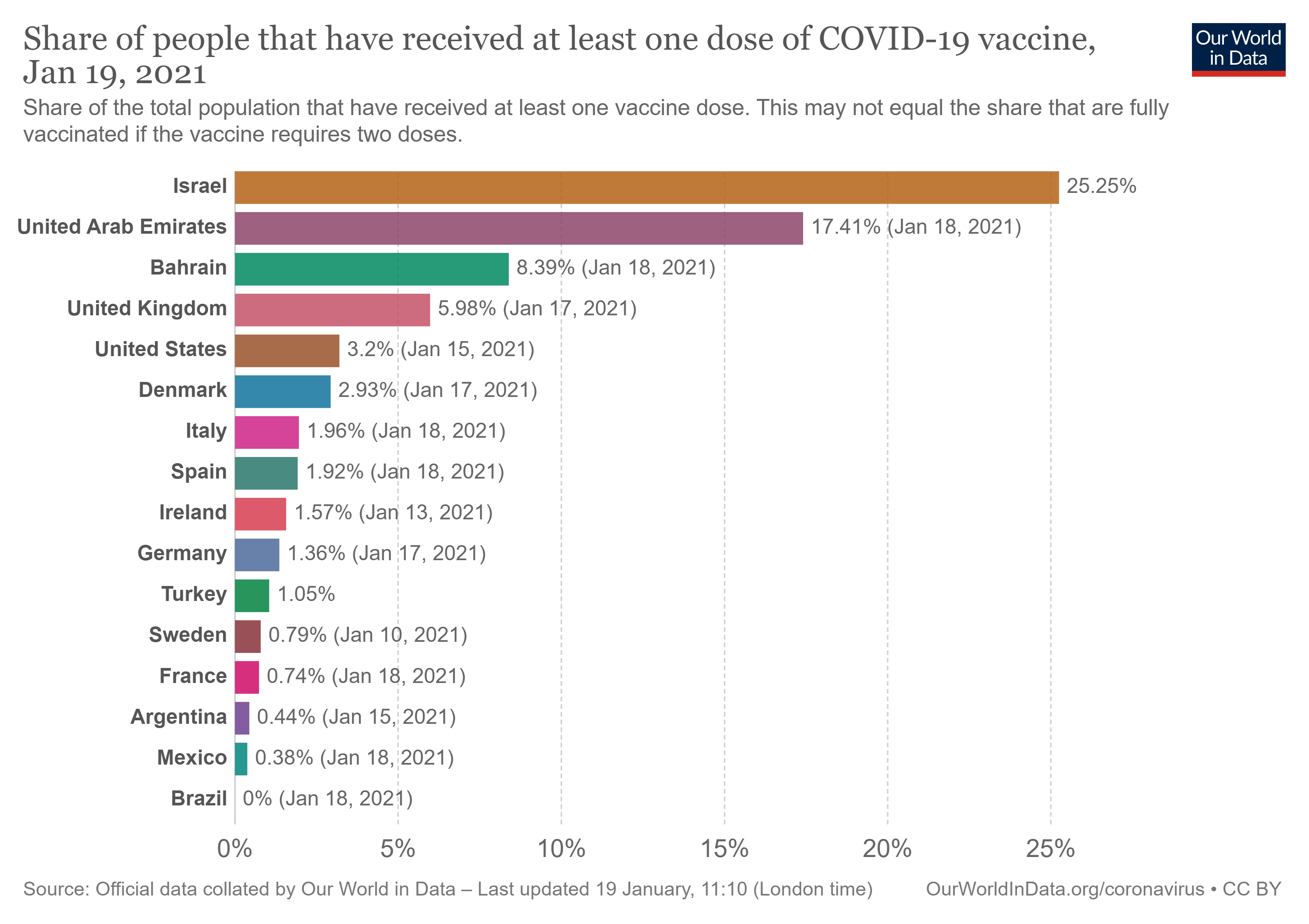
We think that other countries can learn from an examination of the structural and process building blocks underpinning the ongoing COVID-19 vaccination experience in three small Middle Eastern states–Israel, United Arab Emirates (UAE), and Bahrain–that are currently leading the world in the vaccination effort.  These are small countries with populations of between 1.5 and 9.3 million people.  As shown in Figure 1, these states have administered the vaccine to 25.25%, 17.41%, and 8.39% of their populations, respectively, while the United Kingdom, United States, and Denmark trail further behind at 5.98%, 3.2%, and 2.93%.
 

share of people vaccinated covid

What Needs to be in Place at the Country Level to Move from Vaccine Development to Vaccination? 

The development of a new vaccine is not the end of the story.  Rather, it is the beginning of a process to translate the potential benefit of a vaccine into immunity to a disease among the general population via inoculation of a pathogen or antigen that stimulates the production of antibodies.  This requires well-planned, organized, adequately funded, and delivered public health services and programs in the mist of an ongoing pandemic.

The rapid and effective COVID-19 vaccination drive observed in Israel, UAE, and Bahrain is anchored on universal health coverage (UHC) arrangements that ensure that people have access to the healthcare they need without suffering financial hardship.  These arrangements enhance both access and utilization and contribute to people getting vaccinated quickly.

In Israel, with the enactment of the National Health Law in 1995, health insurance became universal. Every resident is entitled to health insurance via one of the health funds (HMOs) based on an open enrollment scheme. The Law sets out a binding, itemized National List of Health Services (NLHS) which must be provided by each HMO to its members. The NLHS covers the total cost of service provision and prescription medicines.

In the UAEmade of up seven emirates, universal health insurance programs are well established.  For example, under the ‘Thiqa’ health insurance program, the Abu Dhabi Government provides full medical coverage for all UAE nationals living in the emirate. Citizens get a Thiqa card, through which they get comprehensive access to a large number of private and public healthcare providers registered within the Daman network of health providers. Saada is a health insurance program for the citizens in the emirate of Dubai. It provides insurance coverage to citizens who do not currently benefit from any government health program. The program provides treatment through a large network of healthcare providers in the private sector and Dubai Health Authority (DHA) healthcare centers.  Moreover, across the UAE, employers and sponsors are responsible for providing health insurance coverage for expatriate employees and their families, creating an important social safety net for the large immigrant population.

In Bahrain, a strategy has been implemented since 2014 to provide health insurance for nationals and expatriates working in both the public and the private sectors.  A full package of comprehensive health services is provided for the whole population. Accessibility for all is maintained by the availability of free services and an established network of 27 health centers and specialized clinics staffed with family physicians.

Planning and Management

All three states have a clearly defined organizational structure and stakeholder involvement underpinning the Program Delivery Vaccination Core Activity to deliver and administer COVID-19 vaccines, including: (i) development of a national deployment and vaccination plan; (ii) identification of target populations; (iii) development and implementation of information/outreach campaigns related to vaccine merits and its deployment; (iv) use and deployment of real-time monitoring tools; and (v) strengthened national immunization budgeting and budget tracking capacity.

In Israel, an all-government effort to support the vaccination effort was launched in December 2020.  The vaccine developed by Pfizer and its German partner BioNTech is being administered. Israel’s health ministry authorized in early January 2021 the COVID-19 vaccine developed by Moderna.   The first stage of vaccination prioritized healthcare workers, the over-60s, and groups considered at risk by virtue of either their age, health, or occupation. Next, priority was given to teachers, who were eligible for vaccination after a decision that schools would resume normal service in the second half of January 2021.  Initially, only large vaccination centers were opened in central locations. Later, smaller neighborhood sites – key parts of the vaccination drive – were set to open to ensure that the vaccine was accessible to everyone. By mid-January 2021, 250 sites were expected to be operating throughout the country.

An issue that has been raised about Israel’s vaccination program is that while it is covering Israeli citizens over 16, including its Arab citizens and Palestinians residing in East Jerusalem, it perhaps should assist the vaccination effort for Palestinian people living in the occupied West Bank and Gaza Strip.  While the 1990s-era Oslo accords grant the Palestinian Authority limited self-rule in the West Bank and the Gaza strip which are controlled by the group Hamas, the expectation is that both sides may cooperate in combating infectious diseases as a critical global health security action to prevent the spread of disease. The Palestinian Authority expects to receive vaccines under COVAX, as well as part of possible agreements with AstraZeneca, Moderna, and the Russian-made Sputnik V vaccine.

In the UAE, the free vaccine program aims to protect both citizens and foreign residents, so anyone living there can get the COVID-19 vaccine.  There are two vaccines in the UAE for use on eligible individuals against the COVID-19 infection: one by Sinopharm and the other by Pfizer-BioNTech.

Bahrain began in November 2020 inoculation of front-line workers as well as some senior officials, prior to completion of Phase III trials of the with BBIBP-CorV (a vaccine developed by the Beijing Institute of Biological Products and put into trials by the Chinese company Sinopharm).  Bahrain formally launched its vaccination campaign in December 2020. All citizens and foreign residents of Bahrain are eligible to receive the vaccine. Registration for a vaccination appointment can be completed online or via a smartphone application.

Supply and Distribution

Key activities under the Supply and Distribution Vaccination Core Activity include: (i) procurement of COVID-19 vaccines, vaccination supplies, and PPE for vaccinators; and (ii) logistics and cold chain.

Israel and parts of the UAE, which are using the vaccine developed by Pfizer/BioNTech, need to store this vaccine at -70 to -80 degrees Celsius.  Short distances in these small countries are key to preventing spoilage during transit. In Israel, vaccine vials, which were stored in a very cold deep freeze, are delivered in batches of 195 vials, providing a total of 975 doses. As vaccines can only be kept for four days after defrosting, every location where the vaccine is deployed has to administer the vaccines to almost 250 people daily.

Bahrain was the second country in the world to approve the Pfizer/BioNTech vaccine, approved China’s Sinopharm vaccine in November 2019, and is speeding up the effort to vaccinate its population to reach herd immunity using its centralized, well-staffed health care system.

Beside using their logistical capability to support their own vaccination efforts, Abu Dhabi and Dubai are using it to serve as a hub for global vaccine distribution.  For example, Abu Dhabi Ports is supporting this effort with a 19,000-square meter temperature-controlled warehouse facility in Khalifa Industrial Zone. The UAE is also is in partnership with SkyCell, a Swiss firm, to produce refrigerated shipping containers that can keep doses cold in transit.  Dubai Airports and GMR Hyderabad have announced the creation of a COVID-19 vaccine distribution corridor with capacity to handle up to 300 tons of vaccines per day. The corridor connects major vaccine manufacturers in India with markets around the world via Dubai’s cargo hub.

Program Delivery

Key activities under the Program Delivery Vaccination Core Activity include: (i) implementation of a national risk-communication and community engagement plan for COVID-19; and (ii) ensuring that vaccines reach the target populations.  In the three countries, healthcare data are centralized and digitized effectively, facilitating citizens to either access an app or call a hotline and receive an immediate appointment for vaccination if they are eligible.

Health authorities in the three countries have enlisted the support of religious leaders to mobilize their communities to get vaccinated. For example, Israeli health officials consulted with ultra-Orthodox media and community leaders, although there is still a lack of trust among Muslim Arab and Christian minorities there.  UAE’s Fatwa Council issued an Islamic ruling in favor of the vaccine, and its chairman was vaccinated in public. The Prime Minister became the first Israeli to be vaccinated live on TV.  The Prime Minister of the UAE and the King of Bahrain have also been vaccinated to encourage others to follow in their footsteps. While the Prime Minister of the UAE announced his vaccination via Twitter, scores of Emirati officials, among them the health minister and the ruler of Dubai, have posted photos of themselves receiving the vaccine.

In Israel, the government has also stepped up its efforts to target disinformation about possible vaccine’s side effects or other risks, with medical professionals on TV reassuring people that the vaccine is safe and effective.  At the request of the government, Facebook took down four groups at the start of the vaccination drive that had disseminated texts, photographs, and videos with content designed to mislead consumers about COVID-19 vaccines. There are incentives beyond the inoculation itself. Israel is set to become the first country to start issuing a “green passport” to residents who have received the full two-dose vaccine – effectively a passport out of lockdown.  The certificate will allow residents to travel abroad without a PCR test, exempt them from some mandatory quarantines, and offer access to cultural events and restaurants when the current national lockdown has been lifted.

In Israel, health facilities across the country are involved in the vaccination effort.  The army enlisted about 700 paramedics to help administer the vaccine ensuring prompt deployment.  The vaccination drive began on December 20, 2020. The government aimed to reach a vaccination rate of around 150,000 people a day within a week, and to have inoculated over two million people by the end of January 2021.  As of January 7, 2021, the Israeli Health Ministry informed that 17.5% of the population – and 70% of citizens aged 60 or older – had received their first shots.  The country’s highly digitalized healthcare system has helped speed the rollout of the COVID-19 vaccination drive in Israel. All citizens over 18 must be registered with one of four competing non-profit health insurance plans – known as Health Maintenance Organizations (HMOs). As soon as the vaccine became available, text and voice messages were sent to eligible groups of people telling them to make an appointment.  If a person has forgotten or overlooked the appointment, they can simply call their HMO, give their ID number and receive an appointment close to their location often for the following day.

In the UAE, Abu Dhabi Health Services Company, (SEHA), the UAE’s largest healthcare network, has opened two COVID-19 vaccination centers in the Emirate of Abu Dhabi and one in Dubai to administer the Sinopharm vaccine.  Other SEHA facilities are also administering the vaccine.

In Bahrain, registration for a vaccination appointment can be completed online or via a smartphone application. The government has also launched mobile units providing home vaccinations against COVID-19 for the elderly and people with special needs.

Some Observations

As the experience of Israel, UAE, and Bahrain shows, political support at the highest levels of government is critical to translate plans into sustained action to achieve clearly defined, measurable targets.  Collaboration and integration of public health and primary care leverages and strengthens the capabilities of a country to deliver vaccinations and to achieve national vaccination coverage targets, although possible delays in any deliveries of vaccines will slow down the rate of vaccination and hence the achievement of targets defined in country plans. While many countries in the West have detailed rules that define priority groups for vaccinations, which can slow distribution, Israel’s has a relatively broad initial eligibility criteria, and both the UAE and Bahrain offer them to all-comers—this option, however, is limited to few countries that have that sufficient vaccine supplies to cover their entire population. The use of broad eligibility criteria may have helped facilitate rapid scale-up of vaccine administration in the three countries, but a potential trade-off is the risk that a broad initial target population will delay access for those who may benefit most from vaccination and/or have least access to healthcare.

Besides having vaccines authorized or approved for administration to the general population, vaccine doses must be supplied. Vaccination requires that vaccine doses must be transported to sites of administration under quality-assured, appropriately temperature-controlled conditions; there must be equipment to administer vaccines; people need to be able to register to get vaccination appointments and must be able to access administration sites.  Supplemental personnel, including active recruitment of volunteers and retired health personnelhas helped to alleviate the strain on overworked healthcare staff facilitating effective vaccination efforts. Innovative methods are also needed to step up the vaccination drive, locating vaccination centers closer to where the population lives and works.

The experience of Israel shows that investing in good digital infrastructure to process and centralize large volumes of health data—like who to vaccinate, shares of immunized people in a given area—provides data and information in real time for program planning and monitoring.

Disease surveillance, prompt patient identification, diagnosis and isolation of all cases, contact tracing, and surveillance of contacts, supported by diagnostic virology laboratories, are critical tools to complement the vaccination effort as the future challenge will be to maintain the interruption of COVID-19 disease circulation over time. Pharmacovigilance systems need to be strengthened to monitor and document on a continuous basis on all reported adverse reactions occurring during and after COVID-19 vaccination and to prioritize for investigation all suspected serious adverse reactions.

Effective public communications and public buy-in are also critical elements of an effective vaccine campaign.  The experiences reviewed clearly signal the importance of strengthening risk communication and community engagement, with a focus on increasing awareness of COVID-19 prevention and to strengthen strategic communication addressing demand-side challenges for vaccine uptake, particularly among minority communities who are more skeptical of the vaccine. Such communications efforts need to address specific national knowledge, attitudes, and beliefs about vaccination, including methods that resonate with the local audience, get them on board, and earn their confidence.   As it has been done in the three countries reviewed above, showing high level political figures receive their vaccines helps reduce vaccine hesitance.

As the development and rollout of safe vaccines for Covid-19 proceeds, helping to eventually achieve herd immunity, a critical factor to stress is the need for governments to continue to support essential public health measures such as the use of masks, hand hygiene, and physical distancing.  These are highly cost-effective measures that complement vaccines in the fight against the pandemic, reducing the spread of the coronavirus and preventing disease and death.

This article first appeared on pvmarquez.com: COVID-19 Vaccination: Israel, United Arab Emirates, and Bahrain are Showing the Way Forward | Patricio V. Marquez (pvmarquez.com)