Siemens Energy, Multinational Employer Healthy Workplace Awards Winner Interview
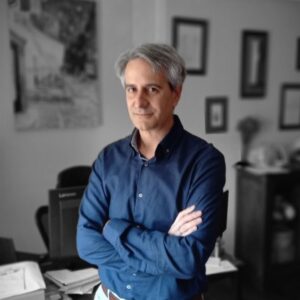
Interview with Jesus Fagúndez Diaz, Global Health Management Lead at Siemens Energy, Germany
What does it mean to you to be a Global Healthy Workplace Awards winner?
For us, this recognition is an important confirmation that the direction we have taken is the right one. Siemens Energy is a very large and diverse organization, so our challenge has never been to create one identical health program everywhere, but to build a common global approach that can be translated into meaningful local action. The award recognizes the work of many health, EHS, HR and business colleagues across countries, and gives us additional motivation to continue improving.
What are the particular strengths of your program, and what advice would you give to a multinational employer developing a global strategy?
I believe one of our main strengths is precisely the balance between global direction and local ownership. We establish a common framework and expectations, while countries and businesses retain the flexibility to respond to their specific workforce, risks and needs. My advice would be not to try to centralize everything. Define clearly what should be common, create mechanisms to measure progress and share good practices, and then give local teams enough space to make the approach relevant for their people.
How do you handle setbacks or challenges, and what advice would you give to others?
In a global organization, setbacks are inevitable. Countries have different maturity levels, resources, regulations and priorities, and an initiative that works very well in one environment may not translate directly to another. We try to treat this as information rather than simply as failure: understand what is getting in the way, involve the people closest to the work, adapt, and continue. A health management system needs enough structure to provide direction, but also enough flexibility to learn and evolve.
Where do you see the future of workplace health and wellbeing?
I think workplace health will increasingly move from isolated wellbeing activities toward a more integrated approach that looks at the conditions in which people work. Mental health, psychosocial risks, organizational culture, leadership and physical health cannot really be managed as separate topics. At the same time, data and AI will give us new possibilities to identify needs and help employees navigate available support, but we need to use these possibilities responsibly and keep people and prevention at the centre.
What are some of the most valuable lessons of taking part in the Global Healthy Workplace Awards and the 2026 Global Summit?
One of the biggest lessons was the value of stepping back and looking critically at our whole system. Preparing the application forced us to connect initiatives, governance, measurement and local examples into one coherent story, and it also showed us where we can still improve. The Summit was equally valuable because it allowed us to compare approaches with other organizations and see that, although our contexts differ, many of the challenges are shared. Winning is a wonderful recognition, but the learning process itself has been extremely valuable.
View Siemens Energy’s Profile
Learn more about the 2026 Global Summit